"Building off-grid Meshtastic mesh networks in Australia"
Building off-grid Meshtastic mesh networks in Australia
Meshtastic turns cheap LoRa radio boards into a self-forming, encrypted mesh: every node relays text messages, GPS positions and telemetry for every other node, with no telco, no subscription and no internet. In Australia the whole thing runs legally on the 915 MHz ISM band under ACMA's low-interference device rules — no licence, no registration. This post covers what a node actually is, what to expect for coverage here, and how to build your first network with hardware we stock.
The band: 915 MHz ANZ, licence-free
Australian Meshtastic operates on the 915–928 MHz ISM band under ACMA's Low Interference Potential Devices (LIPD) class licence. The single most important setup step is setting your device region to ANZ in the Meshtastic app (Radio Config → LoRa → Region) before first transmission — a node configured for the US region transmits on frequencies not permitted here. The Meshtastic in Australia guide at wireless.org.au does a thorough job of the AU-specific frequency plan, the ACMA class licence basis, and the community channel conventions (LongFast default, plus agreed regional channels). Hobbyist operation within LIPD limits carries no reporting or registration requirements.
What a node is, and the two we'd start with
A Meshtastic node is a microcontroller board with a LoRa radio (SX1262 on the good ones), usually a screen, and firmware from the open-source meshtastic/firmware project on GitHub. ESP32-based boards are the most common starting point:
- LILYGO T-Beam (SX1262 + GPS) — A$78.99. Has GPS onboard, which means position broadcast and mapping work out of the box. This is the node you put in a vehicle or a portable pack.
- Heltec V3 (ESP32-S3 + SX1262, cased) — A$74.91. Cheaper, smaller, still ESP32-S3. The classic "start the mesh with three of these" node.
Flashing is a browser job on both: the official Meshtastic web flasher detects the board over USB and installs the right build in a couple of clicks. The Meshtastic docs' local groups page already lists Australian communities you can join once your node is up — including the Canberra Meshtastic Community and South Australia's SA:MUG, whose wiki is a solid AU-anchored reference for mesh, MeshCore and related experiments.
Coverage expectations in Australian terrain
Vendor claims of "10+ km" need discounting for real terrain. Practical numbers for the ANZ 915 MHz plan with stock antennas:
- Urban (Sydney, Melbourne suburbs): 1–3 km per hop, buildings eat 433/915 MHz LoRa alive. Mesh density matters more than raw range — a node on your roof changes the whole picture.
- Rural and regional: 5–15 km node-to-node in open country is realistic; elevated sites with a proper antenna do much better.
- Mesh effect: three nodes placed sensibly cover a lot more than one powerful node, because each hop extends the network. Default hop count is 3, so a chain of 4 nodes reaches 3 hops.
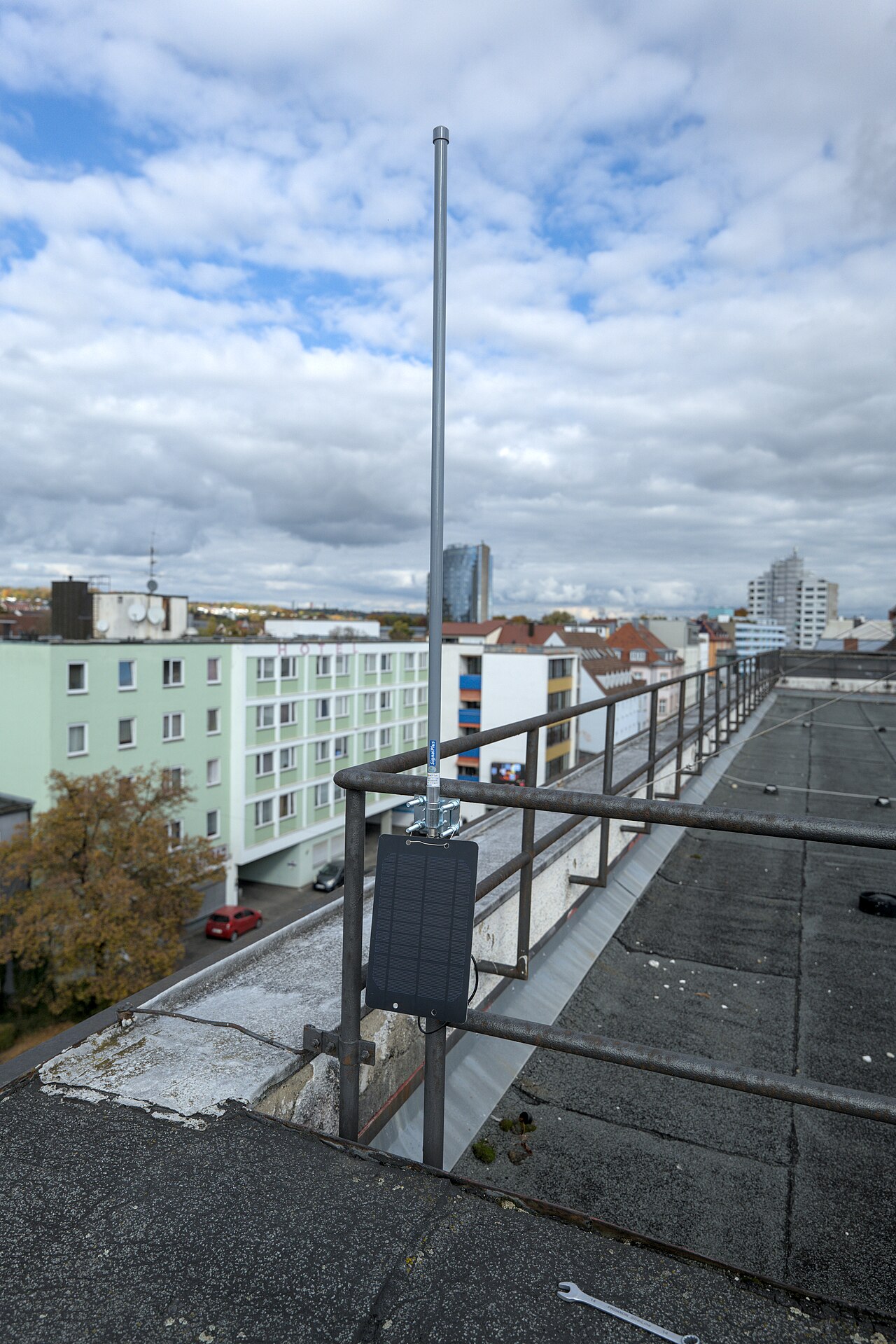
Antenna choice is the highest-leverage upgrade. The LoRa whip antenna for 868/915 MHz (A$14.90) replaces the stubby stock antennas and typically doubles usable range on a fixed node. Never power a LoRa board without an antenna connected — it will cook the radio.
A first network that works
- Two or three nodes (Heltec V3 is the budget pick), flashed via the web flasher, region set to ANZ.
- One node elevated and on mains or solar — this is your mesh backbone. The other two are portable.
- Default LongFast channel for testing; join your regional group's shared channel later via the local Discord (links on the Meshtastic local groups page).
- Test with the T-Beam in a vehicle to see real handover behaviour — wireless.org.au reports 3–15 km open-air as the typical range band for the ANZ region.
Why this matters for comms resilience
Meshtastic is a hobby first, but it's also the cheapest working answer to "what if the mobile network is down" — bushfire season in Australia makes that a live question for a lot of communities. AES-256 encrypted, decentralised, no infrastructure to fail. Keep expectations honest: it's short text messages and positions, not voice and not a phone replacement. For the lawful-use frame, staying on the ANZ region within LIPD power limits is the whole compliance burden; the wireless.org.au guide and ACMA's class licence cover it, and none of it is legal advice — if you're planning a large fixed deployment, check ACMA's current instruments.
Affiliate disclosure: products linked are our own store.