"WA Police are scanning faces in public in real time: Australia's first live facial recognition trial, and the privacy questions it leaves open"
WA Police are scanning faces in public — in real time
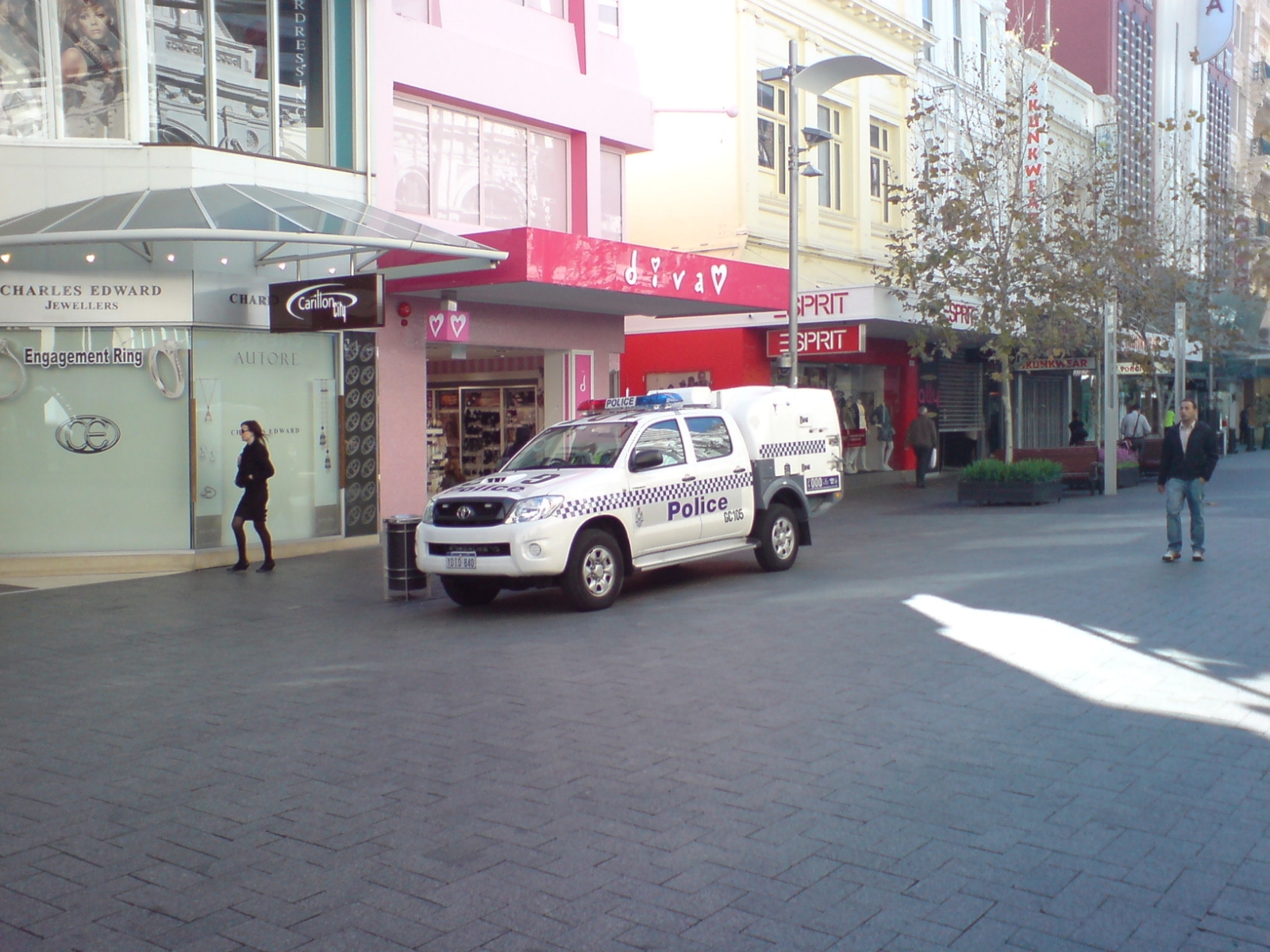
For more than a decade, Australian police have used facial recognition retrospectively: a camera records, a face is matched later. What began in Western Australia in June 2026 is different. Marked police vans with live cameras pan across Perth bus interchanges, shopping centres and major crowd events, scanning hundreds of faces a minute and comparing them instantly against a watchlist of about 4,000 people — those with outstanding arrest warrants, registered child sex offenders and missing persons.
The difference between retrospective matching and live scanning is bigger than speed. Retrospective matching means a decision was made somewhere, by someone, to check a specific face. Live scanning means every face that passes the lens is checked, without anyone asking first. Nine hundred thousand faces scanned against a watchlist of four thousand is a ratio worth holding onto: the overwhelming majority of the work this system does is scanning innocent people.
The system's public debut was hard to stage better: as the Guardian reported, the cameras picked a wanted woman out of the crowd at Mirrabooka bus station while Police Commissioner Col Blanch was mid-press-conference about the trial.
The trial numbers
According to WA Police's own trial update and analysis published by The Conversation, more than 900,000 faces were scanned during the trial, generating 209 alerts and 79 arrests, with eight incorrect alerts. Police say images of people not on the watchlist are pixelated in real time and not saved.
Read those numbers both ways, because they'll be used both ways. One alert per 4,300 scans; 79 arrests against 209 alerts, meaning 130 alerts didn't become arrests; and eight people wrongly flagged in front of cameras and, presumably, officers. The false-positive rate — under one per cent of alerts — looks reassuring next to some overseas deployments. But the raw count is the thing a wrongfully stopped person experiences, and on the Conversation's analysis the accuracy claims deserve the same scepticism police apply to vendor marketing, since the trial's metrics were largely the operator's own.
Those figures will be quoted at every other police force in the country considering the same technology. Whether they prove the case is the argument now underway.
What the regulator said
The state's own privacy watchdog was pointed. The Office of the Information Commissioner WA stated publicly that it was not invited to consult on the trial's design, and warned of "collective privacy harms" — the point that scanning everyone to find a few changes the street for everyone, matched or not. That concept is doing more work than it first appears. Individual harm framing asks: was your data misused? Collective harm framing asks: did the street itself change because people know they're being scanned in bulk? The evidence on that second question, from deployments in London and South Wales, is that people alter routes, dress and behaviour. You don't need to be matched to be governed by the system.
WA is, oddly, the one state with a statute that speaks to this: the Privacy and Responsible Information Sharing Act 2024, the first Australian law to explicitly regulate personal information in automated decision-making — the consolidated Act is on the state legislation site, and its information-sharing and breach provisions apply to public entities including police. The OIC flagged the trial as an early test of that Act, and the non-consultation is the tell: if the new framework genuinely binds the technology, the Commissioner should have been at the table before the vans rolled, not reading about it in the news.
Critics, including researchers quoted by the ABC, note the deeper gap: Australia has no dedicated legislation governing police live biometric surveillance — no binding statutory limits on watchlist criteria, retention, or permitted use cases. Without them, function creep is a foreseeable risk rather than a hypothetical one. The historical pattern is well documented: forensic databases built for one category of offence have been widened, sometimes by administrative decision rather than legislation. A watchlist for "outstanding arrest warrants" can absorb more warrant types, then more categories of person, without a single new law passing.
The Commissioner's own comments feed that concern: he declined to rule out deploying the van at public protests, saying it would depend on intelligence about risks of harm. There's the creep, right there, in one sentence — a use case never announced at the trial's launch, kept "on the table" by the officer who controls the hardware.
On accuracy, the eight incorrect alerts were attributed partly to darker skin tones and lighting — a reminder that error rates in face matching are not distributed evenly, which matters most for First Nations and other over-policed communities. International benchmarks consistently show higher false-match rates for darker-skinned faces and for women, and the trial's own attribution implicitly concedes the point. A system whose errors concentrate on identifiable groups is not a system with a small error rate; it's a system with a targeted one.
What you can do
You can't opt out of a public street. But the retail sibling of this technology — supermarkets and shops scanning customers — has already been found unlawful by the Privacy Commissioner, and knowing where biometric collection happens still matters:
- Assume any public space with a marked surveillance van may be capturing your face. That's lawful in WA's current trial; you're entitled to know it's happening.
- The CCTV and smart doorbell rules that apply to private cameras don't apply to police — different legislation entirely, which is precisely the gap being argued about.
- If you want to understand what radio-frequency surveillance hardware can reveal regardless of face matching, our IMSI catcher explainer covers the adjacent landscape.
The retail precedent is worth one more paragraph. When the Privacy Commissioner determined that Bunnings' and Kmart's facial recognition "unreasonably intruded" on customer privacy, the reasoning turned on proportionality and consent — customers couldn't meaningfully opt out of a face scan to buy a hammer. Substitute "bus interchange" for "hardware store" and the logic transfers almost intact; the difference is that police are carved out of the Privacy Act, and only WA's new statute touches them. A proportionality test exists. The question is who gets to apply it to police.
There's also a plain accountability question the trial left open: who audits the watchlist? Police say it holds people with outstanding arrest warrants, registered offenders and missing persons — three categories, three different legal bases, three different standards of proof. Nothing in the public trial documentation describes who reviews entries, how often, or on what process someone can be removed. A live scanning system is only as proportionate as its list, and a list without a published removal mechanism isn't proportionate in any way you can verify.
Expect other states to move. The trial results will be the brief every police minister is handed — and the OIC's objections are the counterweight to read alongside them. If your state starts a trial, the two questions to ask your MP are who approved the watchlist criteria, and which statute limits them. Where the answer to both is "the Commissioner decides", you have your answer about the guardrails.
This article is general information, not legal advice. Trial figures and status checked on 7 October 2026.