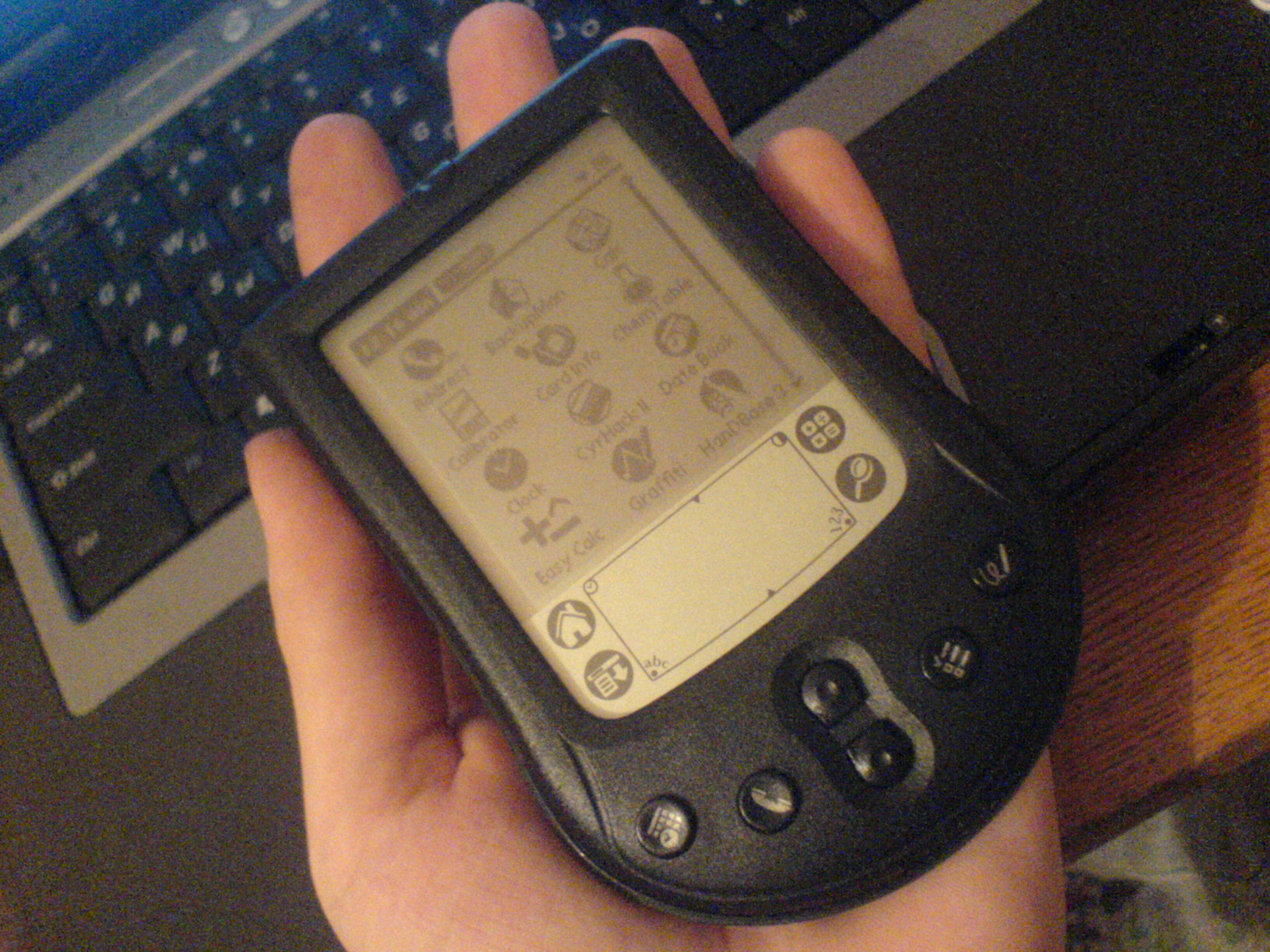
"Five-minute CYD flash: turn your deck into a Palm-style PDA"
Five-minute CYD flash: turn your deck into a Palm-style PDA
The Cheap Yellow Display (ESP32-2432S028) keeps earning its status as the best-value hobbyist computer on the market. The newest entry in the pile: sau412's ESP32 CYD PDA firmware, a Palm OS-inspired personal digital assistant for the exact screen-and-touch board that also powers our StealthDeck Lite. Hackaday's write-up notes the project editors had it running in about five minutes using the repo's web-based flasher — and the difficulty here is genuinely "flash and go".
What it is
Not a Palm OS emulator and not a port — an original firmware that borrows the Palm sensibility for the CYD's 320×240 touch screen. The repo lists the app set: calendar, calculator, contact list, ebook reader, text editor, file manager with image viewing, a translator, a BASIC interpreter, a terminal with real Unix tools (grep, hexdump, md5sum, sha256sum), plus games, Conway's Life, and WiFi apps — an IRC client, RSS reader, Wikipedia reader, Gopher browser and a file server for backups. Licensing is GPL-3.0, so it's free software in the proper sense. Storage runs on the internal FFat filesystem or an SD card; the project README says SD is preferred and lets you back FFat up to it.
The five-minute flash
- Get a CYD board — ESP32-2432S028, the hardware inside our StealthDeck Lite (A$104.88).
- Open the repo's
flash.htmlweb flasher in a Chromium-family browser with Web Serial. - Flash, unplug, replug, calibrate the touch sensor with the built-in utility.
- Optional: add a microSD card so the file manager and backups have room to move.
No soldering, no toolchain, no serial drivers beyond what Web Serial needs. If you'd rather understand the ecosystem the CYD grew out of before flashing, our Marauder firmware roundup covers the security-tooling side of the same board.
What it can't do
Honest limits: this is a 240 MHz microcontroller with 520 KB RAM and a small screen. No phone, no camera, no modern web — the browser is a Gopher client for a reason. The translator relies on an unofficial Google Translate endpoint that could break anytime. Apps without an SD card are limited to internal flash, which Hackaday's editors hit while testing. Treat it as a delightful pocket organiser and experiment bench, not a smartphone replacement.
Why it matters for StealthDeck owners
The CYD PDA firmware is exactly what the StealthDeck Lite hardware was built around — same ESP32-2432S028 board, same touch screen, same exposed radio. Three personalities, one board: Bruce or Marauder for tooling, this for daily-carry organiser duty. If you want the deck path with radios and a support pack included, that's the StealthDeck Lite; if you'd rather roll your own first, the ESP32-S3 DevKitC starter kit (A$45.45) is the general-purpose alternative, though note the PDA firmware targets the CYD's specific ILI9341 display, not the DevKitC.
Skill level
Easy. If you can plug in USB and click a web page, you can install this. The only optional extras are an SD card and, if you want the event beeps, a small speaker.
Lawful use
A PDA on your own desk needs no justification: nothing here transmits beyond normal WiFi to your own network. The WiFi chat app works between CYD PDA users on a local network — use it with people who've agreed to join. As always, our WiFi testing law in Australia post covers the receive-only basics.
Affiliate disclosure: products linked above are sold in our own store.
Sources: Hackaday, "Cheap Yellow Display Dreams Of PDA" · sau412/esp32_cyd_pda on GitHub. Links verified live 2026-10-05.